
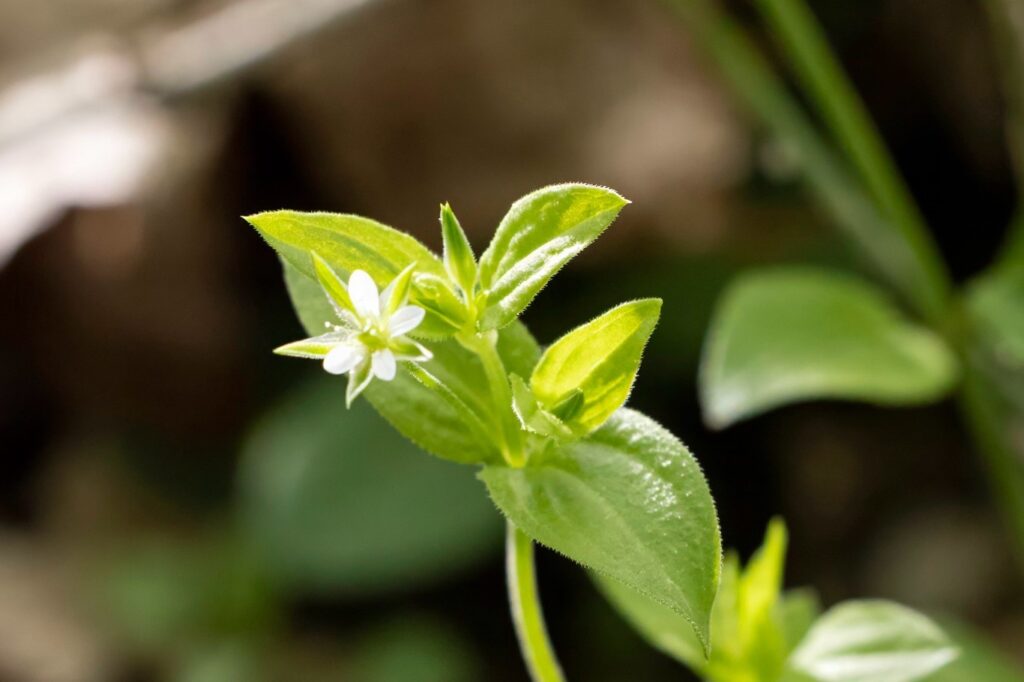
The botanical season is in full swing and Devon and I have had several successful field surveys documenting the early-season plant communities at Library Field. It’s been a joy to watch this landscape waking up, all its dormant life emerging and flourishing across the once-bare hillsides. Our species list is rapidly growing, with a solid cohort of native woodland herbs, shrubs, and trees. Highlights include multitudes of Hairy Solomon’s-Seal (Polygonatum pubescens), discrete populations of Jack-in-the-Pulpit (Arisaema triphylla) and Wild Sarsaparilla (Aralia nudicaulis), and a single Moccasin-Flower orchid (Cypripedium acaule). The shrub layer is coming in nicely, with vast quantities of blueberry bushes, mostly Early Lowbush Blueberry (Vaccinium pallidum) with lesser numbers of other species, including the unique Deerberry (Vaccinium stamineum). Less welcome, a number of aggressive non-native species are competing for this habitat – more on that shortly.
One of the tricky aspects of performing a flora survey is the necessity to catch each species at particular stages in its phenology, which is the technical term for the expression of the developmental events that occur in its annual cycle such as leafing out, flowering, fruiting, etc. Different plants are appropriate for collection in different stages, and some may only be identifiable for a brief time. The exact timing of these is only partly predictable, since the local environmental cues that trigger these physiological responses are themselves variable. Best practices and herbarium policies require that we only collect specimens with reproductive material, so it is not enough to find a plant if it is not yet in flower or fruit.
A few examples from our recent surveys: many trees are now in flower, and a fine rain of arboreal floral debris is accumulating atop last years’ leaf litter. I have been collecting some of these as long as I am able to confidently locate the tree that shed them. The trouble is, some trees flower when they are not easily identifiable (many oaks, for instance), so I have to keep a running list of tree species that I will have to target later in the year, when they produce fruit. Much more inconspicuous but a great favorite of mine, the woodland sedges in genus Carex, are notoriously challenging to identify – indeed impossible for many species, except while they are carrying mature seed but have not yet shed them. Whenever a different species comes up (or one that merely could be different), I have to pin it and make sure to revisit it later, but not too late.
Notable Finds
This past weekend, while crossing and re-crossing the thin parallel ridgelines and slopes that make up the western portion of the Library Field, I noted a small, white-flowered understory herb in several locations that I could not immediately identify. I made a collection, then went home and studied it. After a good amount of technical keying and consultation, I came to a surprising conclusion: this was a plant, a native of Eurasia, that has not been widely documented in the United States. The species is not listed in either of my preferred local manuals, and the Flora of North America notes only a single collection of Three-nerved sandwort (Moehringia trinervia) from the Midwest in the 1990s. As it turns out, its first known appearance in this area dates only from 2024, when it was discovered by a team at Rockefeller State Park Preserve that included Devon. It was also the first record of it anywhere in the United States since the 1990s, as her fellow field technician Devyani Mishra subsequently published in an article in Rhodora, the Journal of the New England Botanical Society. A few days later, when Devon next visited the property, she found the plant in additional locations.
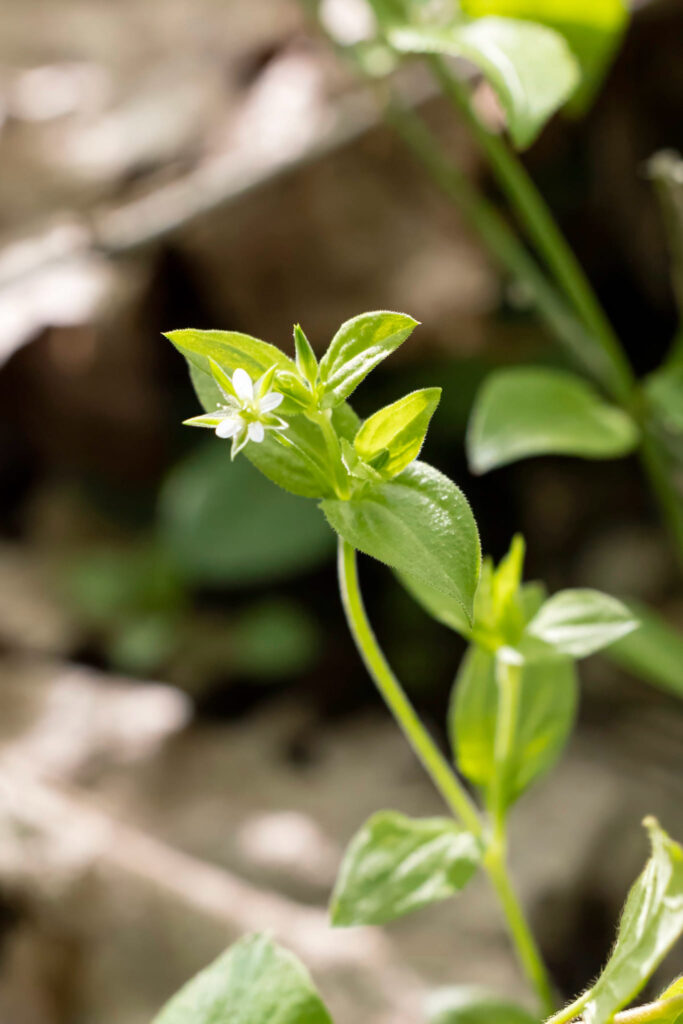
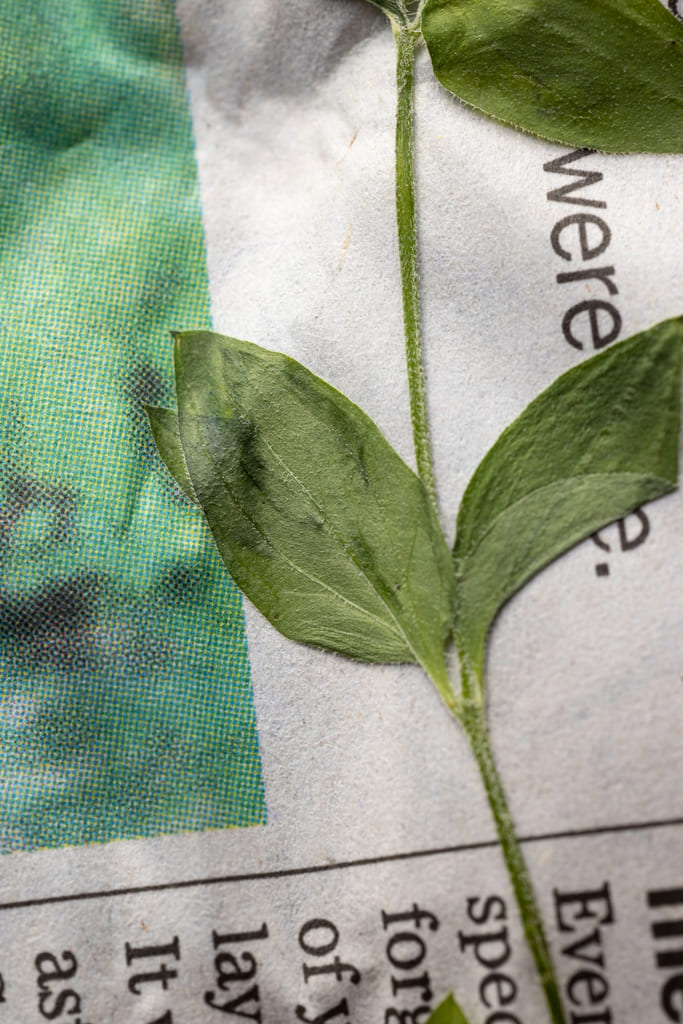
So, we have now made the third (or close to it) confirmed detection of this species in the country and the second in the county (on the same day, it looks like another potential sighting was made up near Binghamton). It appears to be fairly widespread at Library Field, which suggests invasive potential. On the one hand, it is distressing to discover robust wild-growing populations of non-native plants that are scarcely known to occur here at all. On the other, this is a validation of sorts for the work that we are doing: had we not embarked on the flora project, we wouldn’t have known it was here. Now that we know it isn’t confined to Rockefeller and is likely to be found elsewhere as well, we can help get the word out that there may be a new invasive species in our midst.